
USDA Delays Rule to Regulate Deceptive Payment Terms for Poultry Growers
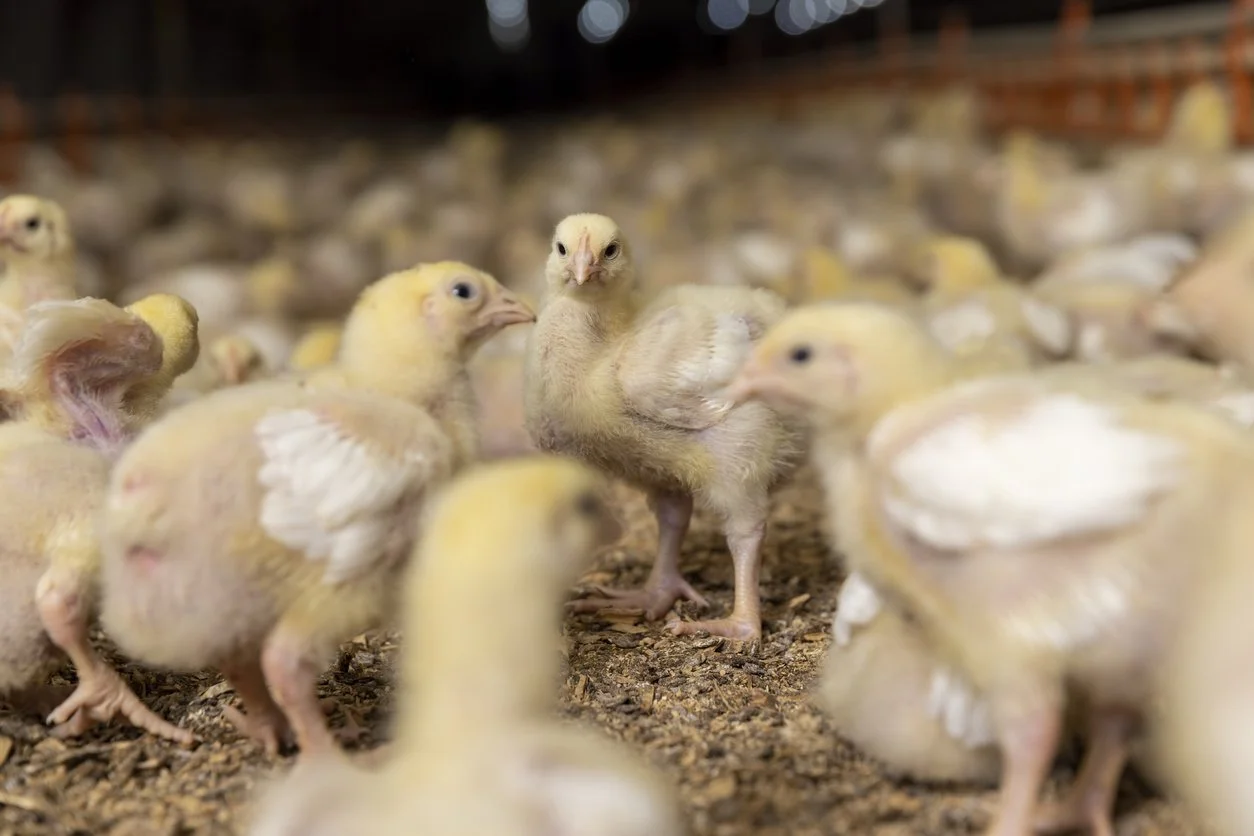
Photo by iStock/ligora
For decades, poultry farmers have urged policymakers to regulate predatory contracts that large meatpacking corporations use to closely control growers. Chicken processors pay farmers wildly different prices for their chickens based on performance outcomes that growers largely can’t control. On top of this income insecurity, processors require growers to make costly upgrades to their barns, trapping many growers in a cycle of debt.
The Obama administration was too slow to finalize rules regulating poultry grower contracts before Democrats lost the House in 2011 and Republicans proceeded to block USDA rulemaking. Obama’s USDA finalized some rules in the lame duck period, which the Trump administration quickly withdrew.
In 2024, the Biden administration finalized a rule that would have dramatically changed poultry contracts by mandating a firm base price, creating fair comparison standards for bonuses, and restricting mandatory capital investments. This rule would have gone into effect in July, but now the Trump administration has proposed to delay implementation until the end of 2027. USDA says it must delay to assess the rule’s costs and legal implications, at Congress’s encouragement.
Farmer representatives across the political spectrum criticized the decision, which runs counter to Trump administration promises to take on concentrated meatpackers. Some worry the delay is a step towards repealing the rule altogether.
“The decision by the administration to tell contract poultry growers to take a back seat by delaying the effective date by a year and a half is disappointing,” said Zippy Duvall, president of the conservative-leaning American Farm Bureau Federation, in a statement. “Growers have spoken on the need to level the playing field with more transparency surrounding how they are compensated, and they believed progress was being made.”
As it stands, when a farmer signs a contract to raise chickens for a company like Tyson or Perdue, they aren’t guaranteed a set price per pound for the chicken they raise. Instead, their compensation changes with every flock based on how efficiently their birds convert feed into pounds of flesh. Farmers with an above average “feed conversion” receive a bonus, which is paid for off the backs of other farmers, whose pay is docked for falling below the average feed conversion.
This zero-sum tournament system stabilizes prices for meatpackers because on net they buy all their chicken for the tournament price average. But for individual farmers, pay varies considerably. A survey by USDA found that in 2020, the bottom 20% of farmers received just five cents per pound or less, while the top 20% received nearly nine cents or more.
Farmers feel that this highly variable pay is not fair because meatpacking corporations control most of the inputs that influence their performance, like feed and chicks. Chicken processors claim to distribute birds and feed equally, but farmers report otherwise. A survey of 105 poultry growers by RAFI found that 92% experienced flock health problems, 83% experienced a 12-hour feed disruption, 75% received an incorrect feed mix, and 72% had chicken companies give them fewer birds. Any one of these issues could be enough to land farmers at the bottom of the tournament system.
In the final days of the Biden administration, USDA finalized a rule that would curtail the most egregious abuses of the tournament payment system. First, it required poultry processors to offer a firm base price for chicken, no more docking from growers’ pay for poor performance. Second, it set standards for how poultry processors can offer bonuses on top of base pay, requiring them to design “fair comparison” methods that take into account the natural variance in chick health or feed deliveries that impact growers’ performance. When poultry processors would need to place a sick flock or circumstances result in severe feed delays, processors need to provide growers a non-performance-based payment option and a way to contest alleged mistreatment.
Finally, the rule would make poultry corporations justify any additional capital investments they require of growers, so when a company tells a farmer they need to upgrade their barn, they must demonstrate the benefits and risks of making that investment. Too often, growers get caught in cycles of debt, because in order to maintain their contracts and generate income to pay off their start-up costs, poultry processors require them to make costly infrastructure improvements and take out yet more debt. USDA estimates that one poultry grow out house costs at least $350,000 to build. To start a standard poultry operation with four houses, contract growers would need to take on at least $1.4 million in debt.
This rule had notable bipartisan support from a range of farmer membership groups, including the Farm Bureau, National Farmers Union (NFU), RAFI, and the National Family Farm Coalition (NFFC), all of whom expressed disappointment at the Trump administration’s decision to delay its implementation.
“[This] rule finally took meaningful steps to right the wrongs of the [tournament] payment system,” said Steve Etka, Policy Director of the Campaign for Contract Agriculture Reform (CCAR), which represents nine groups, including NFU, Farm Aid, and RAFI. “Just when it was scheduled to provide some relief and income predictability for U.S. poultry farmers, USDA has proposed to pull the rug out from under them to feather the beds of multi-billion-dollar meat conglomerates.”
The Trump administration has promised to challenge dominant meatpackers in statements and executive orders, however, this decision casts doubt on the White House’s willingness to change corporate behavior. The Trump administration has cut antitrust enforcement capacity at both USDA and the DOJ, plus it ended a program to support agriculture antitrust enforcement by state attorneys general.
In recent statements to Investigate Midwest, USDA asserted that the Packers and Stockyards Division “remains committed to fulfilling its mission, with approximately 67 employees currently working diligently to carry out its responsibilities and ensure fair and competitive markets.” USDA also said that decisions like ending its state AG program allow the agency to redirect limited competition resources.
Former USDA senior advisor on competition, Andy Green, told Investigate Midwest that the Trump administration appears narrowly focused on enforcing price fixing and may not be using the “full toolkit” of the Packers and Stockyards Act, which can target unjust discrimination and unfair conduct, such as the tournament system.
During the Biden administration, Green oversaw the completion of two other rules regulating poultry markets, which the Trump administration has not yet withdrawn or delayed. The first increased mandatory disclosures in poultry growing contracts, and the second prohibited discrimination and retaliation by poultry processors. The first rule went into effect February 2024, and the second in May 2024, though the largest poultry trade association, the National Chicken Council, has sued to block the anti-discrimination rule.
Segments of this story first appeared in a previous edition of Food & Power.
What We’re Reading
Sysco wants to acquire Jetro Restaurant Depot, a low cost “cash and carry” retailer that small restaurants rely on to buy food and supplies, for $29 billion. Without competition from Restaurant Depot, Sysco will have more power to squeeze mom-and-pop restaurants. (Forbes)
McCormick seeks to take over the bulk of Unilever’s $45 billion food portfolio, turning McCormick into a dominant condiment giant by bringing brands such as French’s mustard, Frank’s RedHot, Hellmann’s mayo, and Marmite all under one roof. Unilever spun off its lucrative ice cream business in December and sold its tea business to private equity in 2021. (CNBC)
Senator Chris Murphy introduced legislation to strengthen the Robinson-Patman Act to better prevent dominant retailers from demanding special concessions from their suppliers and ensure small retailers have equal access to fair prices. (Disclosure: The Open Markets Institute endorsed this legislation.) (Press Release)