
NYC’s Public Grocery Stores Will Face the Same Monopolized Food Market as Privates, But Bigger Public Options Could Change That
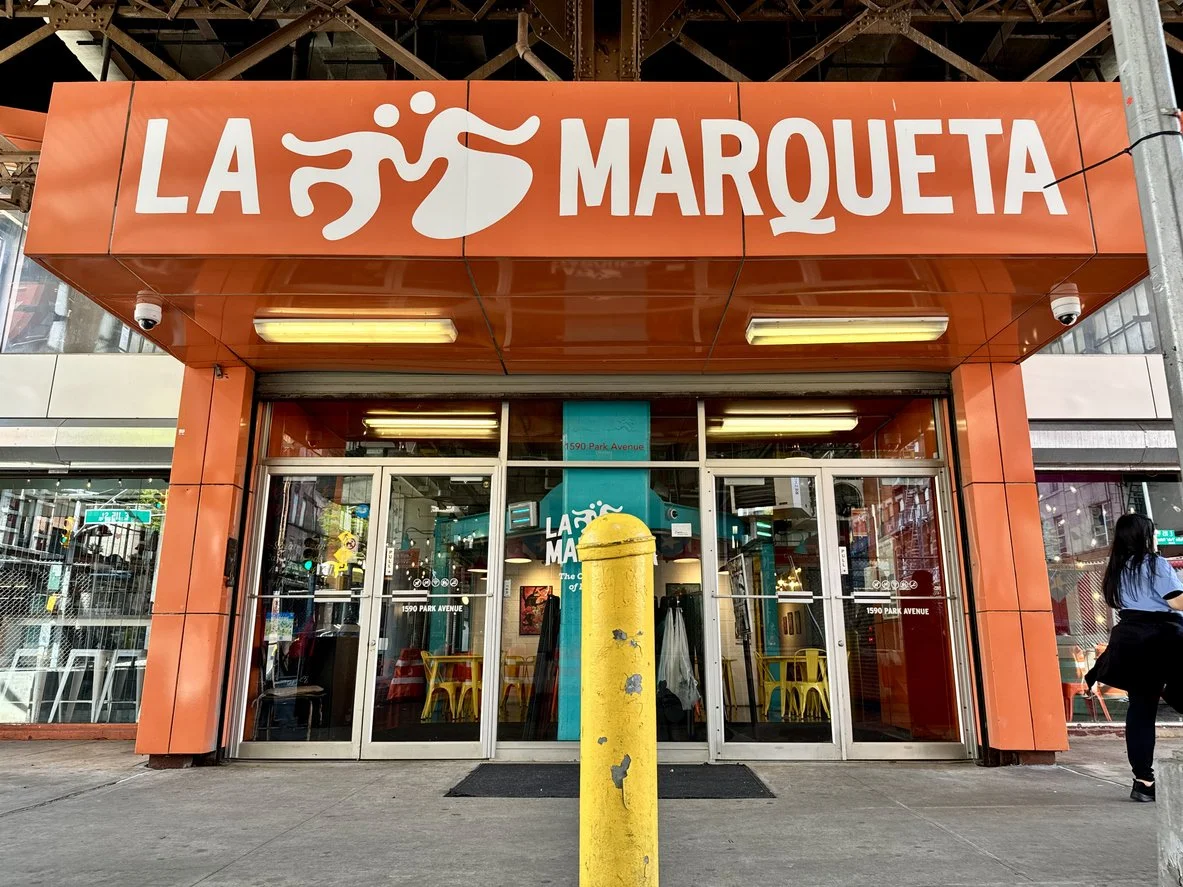
La Marqueta, the Manhattan location for one of Mayor Mamdani’s five public grocery stores. Photo by iStock/MDoculus
Last week, the public got more details about New York City Mayor Zohran Mamdani’s signature and much-debated promise to open five public grocery stores, one in each of New York’s boroughs. The New York City Economic Development Corporation (EDC) published its plan for the public grocery pilot and a request for proposals from third-party operators who’d like to run the stores.
The five stores will sell a basket of essential foods such as proteins, milk, produce, and pantry staples at a 30% discount, and prices for these items can change only monthly. The city will fund these discounts through subsidies to store operators. Operators will not pay rent or taxes, but they must pay employees “family sustaining wages” and commit to a Labor Peace Agreement, permitting workers to organize a union if they wish. Operators will be eligible for performance-based payments tied to customer satisfaction, employee retention, and healthy or sustainable sourcing. Stores will be strategically placed in areas that lack fresh food options or serve low-income families. The EDC has already selected two of the five sites.
Mamdani says the stores will help families put food on the table after years of sharp food inflation; grocery prices are up over 30% since 2019, and a survey conducted earlier this year found two-thirds of New Yorkers report having to choose between buying enough food and paying for other essentials. Critics argue that the stores will run competing small grocers and bodegas out of business, struggle to keep discounted food on the shelves, and do not solve the root causes of rising prices, such as supply chain disruptions and input inflation.
While neighboring small businesses may struggle to compete, five public stores in one of the most diverse grocery markets in the country are unlikely to meaningfully threaten thousands of bodegas. (Especially when the public stores will not sell lottery tickets, cigarettes, and hot food, bodegas’ major revenue earners and the Mayor is helping small businesses in other ways.) By the same token, five public stores will not change the concentrated market structures and corporate power that contribute to rising food prices. New York’s public store operators will probably struggle to get fair pricing just like other non-dominant grocery stores.
Nonetheless, public options have the potential to introduce beneficial competition into the food system and keep private price-gouging in check. If Mamdani’s experiment can survive the criticism and pilot stage, it’d be most effective at a larger scale, and even more effective with wraparound antitrust and fair competition policies to level the playing field for public grocers and smaller stores alike.
The central ways grocery stores can lower prices is by reducing their operating costs (think, Aldi or Costco) or bargaining for wholesale discounts (think, Walmart). To help achieve their 30% discounts, New York City will provide its stores rent-free space and a tax break, lowering their overhead costs. Errol Schweizer, a former VP of grocery for Whole Foods who consulted with the city on their public grocery pilot, told Food & Power that he also encouraged the city to further reduce operating costs through a limited assortment model, akin to Trader Joe’s.
These savings will likely not be enough to get to a 30% discount even on a portion of items. Stores will still need to buy food in a market saturated with massive food corporations (some of which have been accused of price-fixing) and defined by price discrimination. Third-party operators may come with existing supplier relationships, which could help them get better pricing than a small group of five new stores. But even with the power of the city government, securing fair wholesale prices will be a fight.
Since antitrust agencies stopped enforcing a law called the Robinson-Patman Act, the largest and most powerful grocery chains have free rein to bully suppliers for better prices simply because they have the market power, not necessarily because they are more efficient operators. In fact, dominant grocers like Walmart go so far as to pressure suppliers to raise prices charged to their competitors, as an unsealed FTC lawsuit revealed. Even without explicit direction from Walmart, suppliers often raise prices to less powerful customers to afford special deals for dominant customers.
If stores must operate at a deficit to sell essential basket items at 30% below market price (which is almost certain), the city will subsidize the difference to achieve the 30% discount. The New York City EDC will fund item-level discounts for goods in the basket of essentials, calculated based on the volume of sales, much like how food brands pay grocers for on-sale items. The basket of essentials must include all fresh produce sales and all fresh meat sales, plus butter, eggs, milk, yogurt, cheese, tofu, pasta, sandwich bread, rice, beans, nuts, flour, certain cooking oils, canned tuna, soup, and cereal. Operators will be used to accounting for this type of subsidy, and they can make up some losses charging market prices for non-essential items.
Critics contend that it will be challenging for public stores to keep shelves stocked offering food at a 30% discount, but the request for proposal aims to select for experienced operators that can manage the challenge. “Operators will need to demonstrate that they can have food delivered to these stores efficiently and that it can be stocked and merchandised quickly to ensure shelves stay full,” Schweizer says. The RFP also says that operators will be expected to “prevent excessive bulk purchases,” to avoid retail arbitrage where competing private stores buy subsidized goods from the public stores.
The item-level discount is expedient for the pilot, but it means that New York will foot the bill to subsidize the discriminatory, monopolized prices that the third-party operators pay their wholesalers. Of course, a five-store pilot in one city, even the largest in the U.S., cannot be expected to reshape an unfair food system overnight. Should the experiment succeed, expand, and evolve, there’s a broader role that public options could play to reset the terms of grocery competition and combat corporate price-gouging, in New York City and beyond.
For instance, a public grocery wholesaler could disrupt price-discrimination dynamics and provide fairly priced food for public and private grocers alike, shrinking the price gap between dominant grocers and independent competitors. Creating this kind of infrastructure would take more time and likely more money than this five-store project. The Mamdani administration wants to deliver affordable essentials fast, which is worthy of public investment given the state of food insecurity in New York.
It also bears mentioning that subsidies for grocery stores are not the only way to ensure families can afford food. Congress and the Trump administration dramatically slashed SNAP benefits in the One Big Beautiful Bill. SNAP is an effective demand-side subsidy that helps feed low-income families and support grocers of all sizes. Public grocery efforts, competition policy, and expanded SNAP benefits can all work well together: fairer food markets can lower prices and help SNAP benefits go farther, and SNAP benefits can give everyone purchasing power to keep independent stores open in their neighborhood.
What We’re Reading
USDA data projects that beef imports will rise this year into next. Imports from Brazil increased 150% from 2021 to 2025, a boon to the world’s largest meatpacker, JBS. (Investigate Midwest)
The cattlemen’s group R-CALF sued packers for allegedly conspiring to suppress prices for fed cattle in 2019. Last month, their antitrust suit passed a key hurdle and received class certification. (Tri-State Livestock News)
Large agriculture organizations including the California Farm Bureau, California Fresh Fruit Association, California Strawberry Commission, and the Dairy Institute of California are throwing their weight against California’s antitrust reform bill, saying it could threaten cooperatives and shared marketing agreements. Advocates say the bill is not meant to target farmers and in fact stands to help farmers challenge concentrated buyer power. (AgriPulse, The American Prospect)