
ICE Surge in Minnesota Hits Meatpacking Towns
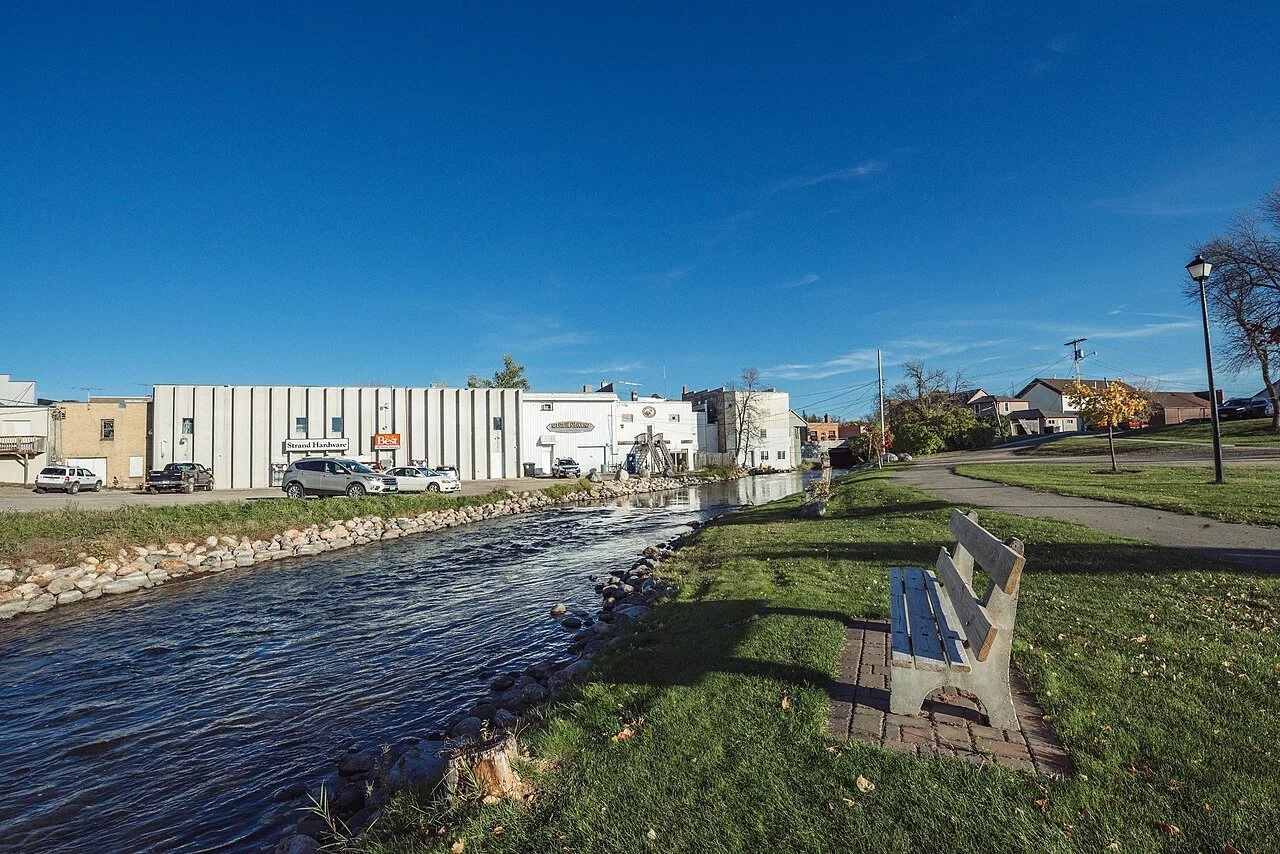
Pelican Rapids, MN, home to a Hormel turkey processing plant. Photo by Tony Webster via Wikimedia Commons
Operation Metro Surge has fallen from the national headlines, but elevated ICE activity continues in Minnesota. Fewer than 1,000 federal immigration agents remain, down from a peak of over 4,000, but up from the previous 190 agents that oversaw immigration enforcement and removal across North Dakota, South Dakota, Iowa, and Minnesota. Many immigrant families continue to stay home out of fear. ICE activity has also shifted to outside the Twin Cities, including rural meatpacking towns as far as three hours away from Minneapolis.
More restrictive immigration policies have chilled social and economic activity within rural immigrant communities and contributed to staffing cuts at one Minnesota meatpacking plant. The threat of immigration enforcement makes workers more vulnerable to abuse and poses an existential dilemma for meatpacking towns that largely benefit economically from immigration.
“People who used to go out and run their errands, now are scared to do that,” says Jackson Henry, union representative for UFCW Local 1189. “We have gone and tried to help people by delivering food, and even when we go to those people’s homes, sometimes they won’t come out, that’s the level of fear that people live with.”
Immigrants have put meat on American plates for over a century, since the days of Upton Sinclair’s The Jungle. Initially, large U.S. meatpackers set up plants in cities near critical railroad junctions. Starting in the 1960’s, larger, more mechanized packers made a concerted effort to bust labor unions, move plants to rural areas, and recruit more immigrant workers. Today, 33% of meatpacking workers in the U.S. are immigrants, according to Census Bureau data, compared to 17% of the total civilian U.S. workforce. This figure is likely higher, as the Census Bureau tends to underreport unauthorized workers, who may make up as much as 23% of all meatpacking workers.
Meatpacking is a dangerous job, with workers wielding knives repeating the same rapid motions sometimes thousands of times a day. Others work around heavy machinery or deadly chemicals. Recent USDA studies found that 81% of poultry plant workers and nearly half of pork processing workers are at a high risk for developing musculoskeletal disorders. Meatpacker injury rates are three times the national average, with exceptional rates of serious injuries: between 2015 and 2017, the industry averaged two amputations a week. The Trump administration wants to make this worse by raising the cap on processing line speeds. Workers who do not speak English, do not have secure legal residency, or face danger returning to their birth countries have less liberty to speak up against abuse and hazardous conditions.
The meatpacking industry is no stranger to immigration enforcement. In December 2006, ICE conducted the largest immigration raid in U.S. history at six Swift meatpacking plants, arresting and sending 1,300 workers to detention centers. This raid included a Swift plant in the town of Worthington, MN, where 200 workers were arrested. JBS acquired Swift in 2007. After this raid, large meatpacking corporations began working with refugee resettlement agencies to hire more refugee workers and establish a “deportation-proof workforce.”
Industry experts estimate that the number of undocumented meatpacking workers has declined since 2006, but nonetheless, the first Trump administration conducted a few worksite immigration raids at meatpacking plants in Ohio and Mississippi. Some labor scholars posit that the public spectacle of immigration raids increases employer power over workers, as they can coerce workers with the threat of immigration enforcement.
This latest wave of aggressive, and at times unconstitutional, federal immigration enforcement in Minnesota has generally targeted communities, not worksites. This approach stokes general terror for all immigrants, including citizens and legal residents. Immigrant families are staying home more, or kids are missing school in rural meatpacking towns such as Willmar, Worthington, Pelican Rapids, and Long Prairie.
Decreased economic activity hurts local businesses, including the Kerkhoven Country Butcher, a small immigrant-owned meat processor. Giorgia Gallardo immigrated to the U.S. from Venezuela nearly 30 years ago and opened Kerkhoven Country Butcher in 2020 with her husband, who used to butcher hogs in Cuba. Both are legal U.S. residents. They custom process primarily halal goats, lamb, deer, and cattle. Gallardo has seen far fewer walk-ins since Operation Metro Surge, especially fewer halal customers.
“Clients we used to have came from St. Paul, St. Cloud, Minneapolis, Willmar, but now people are scared to come,” Gallardo says. “They asked if I can deliver, I wish I could, but if I do that, I won’t make money.”
Miguel Gutierrez, another union rep for UFCW Local 1189, says that workers at the American Foods Group processing plant in the town of Long Prairie, MN, have been afraid to come to work, but cannot afford to miss shifts, because most live paycheck to paycheck. Workers find ways to safely get to work and otherwise retreat from daily life.
In addition to deploying more ICE agents, the Trump administration has restricted immigration pathways, particularly refugee resettlement and Temporary Protected Status (TPS) for people fleeing violence and natural disasters. The meatpacking industry has the fifth-highest concentration of refugee workers, and as of 2020, approximately 15,600 people with TPS worked on farms or in food processing, especially meatpacking. The Trump administration is trying to terminate TPS for immigrants from many countries, including Haiti, Myanmar, Venezuela, and Somalia. It also indefinitely suspended refugee resettlement for all people except white South Africans and directed ICE to arrest refugees who have not applied for a green card within their first year in the U.S. These decisions face legal challenges.
American Foods Group (AFG) in Long Prairie laid off over 100 workers this summer after the Department of Homeland Security terminated humanitarian parole for individuals from Haiti, Cuba, Nicaragua, and Venezuela and revoked their work permits. The decision not only hurt the workers who lost their jobs, but it also put additional pressure on Long Prairie’s remaining workforce. Union rep Jackson Henry says that staffing shortages have led to more overtime and injuries. Decreased output also hurt workers down the supply chain at a factory in South St. Paul that relied on hides from AFG. “They also had to reduce staff, because they weren’t getting enough hides to run at capacity, so that impacted their production significantly,” Henry explains.
The irony of this immigration crackdown is that several studies suggest that immigrant workers like those at AFG and immigrant small business owners like Gallardo largely support lagging rural economies. In Minnesota, the most racially diverse rural counties tended to see their populations increase, while largely white or less diverse rural counties saw population declines. Meatpacking plants are significant drivers of migration to rural Minnesota counties. Nationally, counties with high levels of meatpacking employment saw an average of 9% population growth between 2000 and 2010. Population growth is not the only measure of economic success; however, for rural communities, population decline is associated with a decrease in essential community services, including healthcare, education, and grocery stores.
Immigration foes often claim that immigrants put a strain on rural government resources; however, one study found that meatpacking plants and their employees do not increase per capita public spending or public assistance needs. Economic analyses generally find that immigrants raise the local tax base and pay more in taxes than they receive in benefits.
“We talk to community leaders, pastors, all that, and the feedback is the same, the town is thriving by having people come into the community,” Henry says. Plant workers “don’t just come and work and leave, they settle and establish themselves. They create families, their kids go to the local schools, they use the local grocery stores, go to the same churches, they get into the community and grow it.”
What We’re Reading
Even as the Trump administration tries to remove their TPS, Haitian and other immigrant meatpacking workers voted to authorize a strike at JBS’s plant in Greeley, Colorado. (Food & Environment Reporting Network)
Approximately 12-15% of the world’s fertilizer travels through Middle Eastern seas, meaning war with Iran could raise already high fertilizer prices. (Farm Policy News)
A judge denied AgriStat’s motion for summary judgment in the DOJ’s anticompetitive information-sharing suit, moving the case forward. (MLex)
A new report reveals how Big Tech is concentrating more control over agricultural information with the rise of digital agriculture products. (iPES-Food)