
Minnesota Mega-Dairy Gets Greenlight to Expand
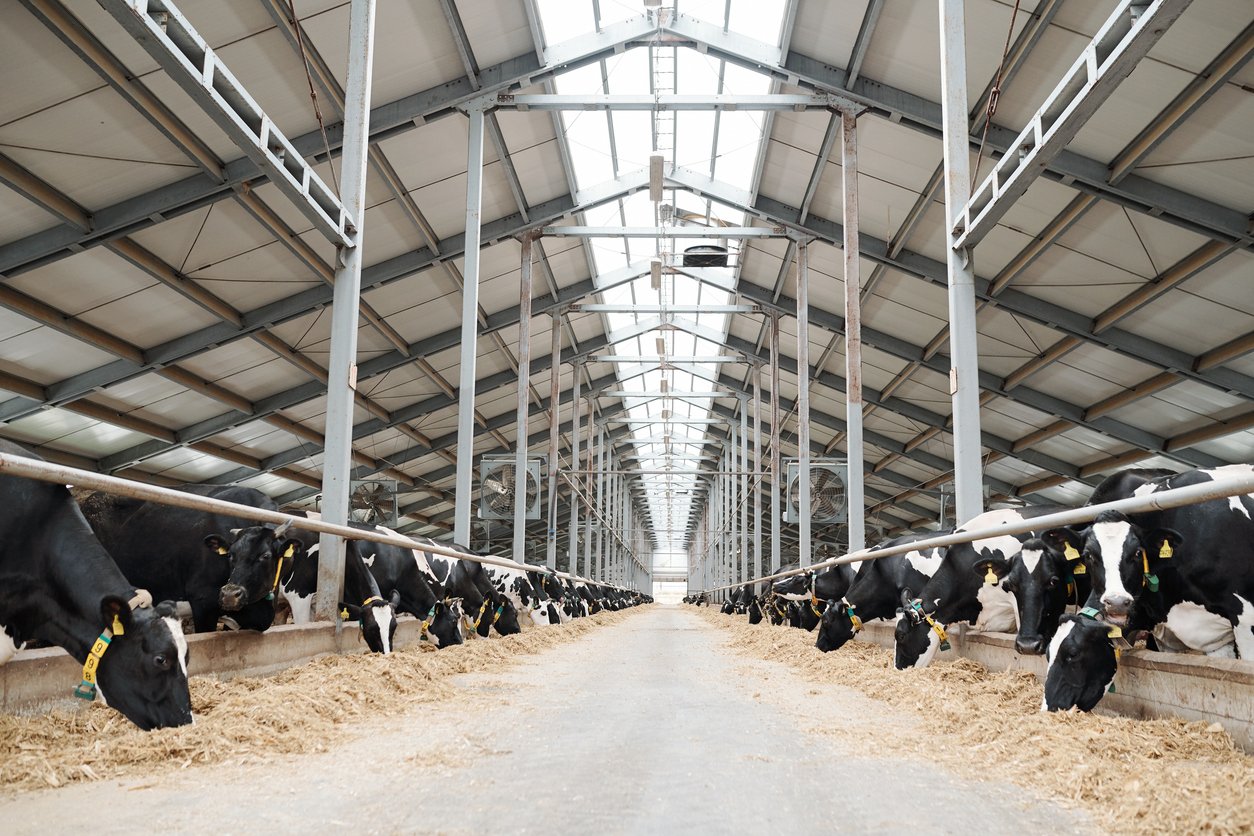
Photo by iStock/Pressmaster (Not a photo of West River Dairy)
The nation’s second-largest dairy farming business is poised to expand a massive dairy farm in Minnesota that would dwarf the state’s traditional farmer-owned operations. Earlier this month, the Stevens County Board of Commissioners permitted Riverview LLP to expand its flagship West River facility in Morris, Minnesota, from 7,855 cows to 18,855 cows, after the Minnesota Pollution Control Agency (MPCA) approved West River's environmental assessment in June.
Small dairy farmers, rural communities, and environmental advocates have been fighting to curtail Riverview’s expansion plans. The limited liability partnership, which started as a Minnesota beef and crop farm back in 1939, today focuses on dairy and operates some of the largest dairy farms in the country across five states.
Advocates worry that enormous operations like West River will strain water resources, pollute local air and water, and drive out small to mid-sized dairy farms, hurting rural communities. Riverview’s Minnesota farms already account for one-third of all dairy cows in the state, and it hopes to expand further.
“Dairy farmers are calling for the opportunity to have access to markets, to get a fair price, to eliminate discrimination, and to address this consolidation. That is going to be better for rural communities over the long term and better for the food system,” says Sean Carroll, policy director for the Land Stewardship Project, a Minnesota membership-based organization promoting sustainable agriculture.
Riverview says that its expansion supports rural communities, as each of its large farms creates 40-100 permanent jobs. “Riverview is committed to responsible dairy production and being a good steward of the land, water, and communities where we operate,” said Brady Janzen, a partner at Riverview, in an e-mail to Food & Power. “We believe the project will provide significant economic benefits to the region while helping meet continued demand for high-quality dairy products.”
The Land Stewardship Project argues that Riverview’s farms displace more jobs than they create. For example, the West River Farm will employ around 40 people, but it will house the same number of cows (and thus produce about as much milk) as 67 average-sized Minnesota dairy farms (at roughly 280 cows, each). So West River risks displacing more dairy farmers (and their workers) than it promises in new jobs. It also concentrates employment in one community instead of dispersing it across many.
“Dairy has long been a zero-sum business,” says James Kanne, a sixth-generation small dairy farmer in Franklin, Minnesota. “Somebody else has got to take the losses for you to make the gain, and generally what that has meant is losses for our rural communities.”
In just two decades, between 2004 and 2024, the U.S. lost 63% of its licensed dairy herds. Minnesota saw a similar rate of dairy farm loss. Dairy farmers are going out of business because they cannot get a fair price. Between 2000 and 2021, the average U.S. dairy farm only turned a profit twice. Prices remain below most farms’ breakeven point, in part, due to a global milk oversupply. To try and survive on lower prices, farms expand, milk production goes up, prices remain low, and small farms fail. Production is rapidly consolidating onto fewer, larger farms. As of the latest USDA census, in 2022 the largest 3% of dairy farms with 2,500 cows or more produced 45% of all milk, up from 35% just five years prior.
A new breed of what some call “mega-dairies” exacerbates these trends. Corporations such as Riverview, Faria Brothers, and Rockview Farm are breaking records building massive dairy operations with anywhere from 5,000 to 20,000 cows or more. Riverview’s calf-raising operations house upwards of 70,000 cows. Mega-dairy operators say they are unlocking new economies of scale and meeting demand for products like whey and cheese. But small producers like Kanne say they are flooding the market when prices are already low to gain market share and lock up access to processing.
Farmers have fewer outlets to get their milk to market as dairy cooperatives and processors have also consolidated over time. Not only do third-party processors generally prefer to work with fewer, larger farms, but mega-dairies like Riverview have the capital to build their own processing. Riverview is building a milk powder plant near West River. About 70% of U.S. skim milk powder gets exported. As U.S. dairies produce more milk than Americans demand, farmers and processors increasingly rely on export markets.
Concentrating dairy production also raises considerable environmental concerns. Whereas cows grazing on pasture naturally spread their manure across the land, mega-dairies concentrate large volumes of manure in one place. This concentrated manure generally breaks down without access to oxygen, releasing more climate-warming methane gas. Manure lagoons or liquid manure spread on fields can also pollute surrounding surface or ground water. Nitrates from large animal operations and fertilizer runoff contaminate drinking water for millions of Americans and are linked to higher cancer rates.
An expanded West River dairy will produce an estimated 200 million gallons of manure and wastewater annually. Riverview plans to spread this manure across 13,200 acres of cropland in two counties. “The West River Dairy project has undergone extensive public and regulatory review, and we will continue to meet all state and local requirements governing water use, manure management, and environmental protection,” said Riverview’s Janzen.
Environmental advocates argue that Riverview’s plan does not sufficiently demonstrate that manure can be applied at safe rates to avoid runoff pollution. Riverview has previously failed to comply with manure storage standards and nitrogen application rates. Its manure lagoons and energy-generating biodigesters have also leaked: an incident in 2024 released 50,000 gallons of manure, and another last year leaked 2 million gallons.
Mega-dairies also have massive water demands. Riverview’s West River seeks permission to pump up to 226 million gallons of groundwater annually; by comparison, the nearby town of Morris, with over 5,000 residents, can pump a maximum of 300 million gallons of water annually.
Riverview attests that it can safely withdraw this water based on a 2007 analysis, but environmental advocates argue that this information is outdated and the state should collect more information about the risks of withdrawing so much water. In Arizona, Riverview’s calf operations are depleting local aquifers as the company builds deeper wells than its neighbors. Earlier this year, Riverview agreed to pay $11 million to Sulphur Springs Valley residents to cover new wells, water infrastructure, or water hauling costs following public nuisance allegations from the Arizona State Attorney General.
More than 1,400 people submitted comments to the MPCA regarding Riverview’s West River expansion. Despite concerns from the public, the MPCA accepted Riverview’s environmental assessment in June, paving the way for the Stevens County Board of Commissioners to greenlight expansion earlier this month.
The Minnesota Department of Agriculture will produce a report for the state legislature on the socio-economic harms of large dairies based on public comments. Advocates hope that the legislature will act to halt the expansion of mega-dairies and pass fair market rules to prevent dairy from going the way of other highly consolidated livestock industries. Some analysts compare this moment in the dairy industry to where the Midwest hog industry was in the 1990s, when nearly 80% of U.S. hog farmers went out of business in just two decades as large, concentrated animal farms emerged and prices collapsed.
What We’re Reading
The Senate Farm Bill passed out of Committee yesterday on a party-line vote. It faces an uphill battle passing in the Senate, where it needs some Democrat support. The Agriculture Committee’s bill maintains the One Big Beautiful Bill’s significant cuts to SNAP and reduces funding for conservation programs. On a bright note, it includes a provision to restore mandatory country of origin labeling for beef. (Successful Farming and Food & Water Watch)
Three major processors dominate salmon processing in Alaska’s Bristol Bay. Upstarts are trying to change that. (The Food & Environment Reporting Network and Offrange)
Food giants allege that sugar corporations shared sensitive data and colluded to raise prices, following a group of bakeries and restaurants that brought a similar suit in 2024. (Reuters)
More Perfect Union exposes Driscoll’s monopoly on berries and how it harms workers, farmers, and the environment. (More Perfect Union)
Joesley Batista, one of the billionaire brothers who own JBS, met with President Trump last month to discuss how increasing Brazilian beef imports could lower beef prices. Shortly after, Trump lowered tariffs on beef imports. (Wall Street Journal)