
DoorDash’s Takeover of Instacart Threatens Consumers, Workers, and Grocers
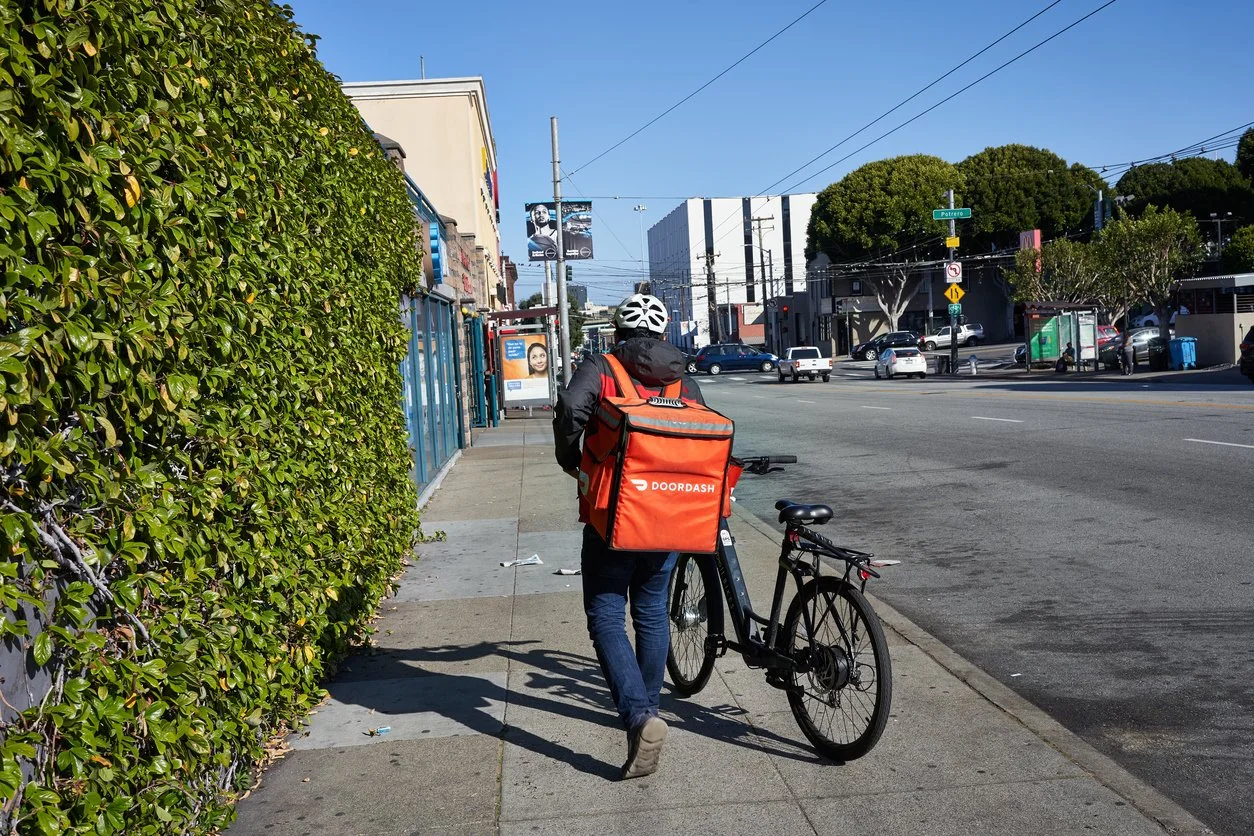
Photo by iStock/hapabapa
DoorDash, the country’s leading restaurant delivery app, wants to buy the leading grocery delivery app Instacart for $17 billion, creating a behemoth that could drive up grocery prices at a time when many Americans are already struggling. A merger of the two apps would also mean more predatory data-driven targeting and lower wages for millions of precarious delivery workers.
Food delivery apps have spent years burning venture capital to grow their user base and consolidate the market. The end game for a digital delivery middleman is monopoly: these firms seek market power to squeeze workers, retail partners, and customers to turn a profit.
This deal should face antitrust scrutiny for reducing competition in the markets for third-party grocery delivery and the gig worker labor market. However, the Trump administration has been more lenient to large mergers.
DoorDash has more than a three-fifths share of the U.S. restaurant delivery market, up from 44% five years ago. Together with Uber Eats, the two corporations control nearly 87% of U.S. restaurant delivery. DoorDash expanded, in part, through acquisitions, taking over Caviar, campus-focused Tapingo, and international rivals Deliveroo and Wolt.
DoorDash has been moving into grocery and general retail delivery, partnering with national chains such as Kroger, Macy’s, Sephora, and Dollar Tree. Taking over Instacart will make DoorDash the largest restaurant and third-party grocery delivery app overnight, with access to some 150,000 retail locations.
DoorDash and Instacart claim they’re competing with retail giants Walmart and Amazon when it comes to grocery delivery to evade regulatory scrutiny. However, DoorDash and Instacart are also directly competing to serve grocers that do not have the means or desire to build an in-house delivery system. In a 2021 survey of grocers, 66% of respondents felt they could not scale their online shopping business without third-party delivery apps, despite widespread concerns that a third party would get between them and their customers. In the market for third-party grocery delivery, Instacart dominates with a nearly 58% market share. This deal would shrink grocers’ options at a time when many already struggle to make delivery profitable.
“DoorDash will need to ensure that it is seen as a partner that enables retailers to succeed, rather than an increasingly powerful intermediary that extracts value from the business,” Neil Saunders, managing director of analytics firm GlobalData Retail, told Grocery Dive.
Third-party delivery apps charge fees and commissions to participating retailers, which add up to anywhere from 5% to 15% of order totals depending on the arrangement. Independent grocers have less leverage to negotiate fair commission terms with tech intermediaries. In a thin-margin business like grocery, these fees can make third-party delivery unprofitable for stores, and some retailers elect to charge higher prices on DoorDash or Instacart to make up the difference. Thus, if DoorDash uses its market power to extract more fees from grocers, prices for shoppers may also rise.
Commissions aren’t the only reason shoppers may pay more for the same products on a delivery app than from the store. Algorithmic pricing can also drive markups. A December 2025 investigation by Consumer Reports and Groundwork Collaborative found that Instacart ran pricing experiments that charged different shoppers different prices for the same products. Instacart offered shoppers ordering from the same store different prices on nearly three-quarters of the studied products; the average difference between the highest and lowest price offered was 13%. Instacart stopped these pricing experiments after the investigation, but Groundwork and other consumer advocates still worry about the potential for apps like DoorDash to charge variable or personalized prices.
Instacart has said it does not use personal data to set prices on Instacart. Since New York has required corporations to disclose algorithmic price setting, both Instacart and DoorDash have included disclaimers that they calculate delivery fees and offer “personalized incentives” or “promotions” based on users’ information.
Personal data also drives DoorDash and Instacart’s lucrative advertising business. DoorDash and especially Instacart increasingly monetize data on your shopping habits to help food and consumer brands place targeted ads not just within their delivery apps, but also on your smart TV and across the internet. Advertising has a higher profit margin and makes up roughly 28% of Instacart’s revenue and 10% of DoorDash’s. Combining data troves on shopping habits across multiple retailers will further attract advertisers to spend with DoorDash over retailers themselves.
Gig workers are also vulnerable to DoorDash and Instacart’s surveillance. The app-based delivery business model does not pencil out without the ability to exploit gig workers. Gig workers are classified as independent contractors, denying them basic labor protections including a minimum wage. Apps claim that independent contractors have flexibility to work when they want, but DoorDash and Instacart penalize or suspend workers for rejecting orders or failing to meet other unforgiving metrics, restricting their autonomy and ability to take even a 10-minute break. Pay varies based on location and opaque bonuses and incentives set by algorithms.
The cost of gas, wear and tear to vehicles, unpaid idling time, and taxes eat into gig workers’ net earnings. Instacart shoppers report take home pay after expenses between $9 to $12 per hour; some report making more, others a lot less. Dashers report net earnings between $8 to $14 per hour, though under DoorDash’s new hourly pay option, some drivers report earning less than minimum wage. Plus, so much of these earnings rely on unpredictable customer tips (50-70% for Dashers and 42% for Instacart shoppers). Apps directly pay workers very little. One analysis of Dashers found that, without tips, DoorDash pay after expenses only came to $1.45 per hour, on average. Delivery apps also engage in plain old wage theft; in September, DoorDash agreed to pay $115 million to more than 260,000 underpaid workers after the city of New York sued the corporation for missed pay, late pay, and municipal minimum pay rate violations.
This merger will give DoorDash even more power over gig workers and reduce competition for their labor. Gig workers often toggle between multiple apps to find the best wages and reduce unpaid idle time. Combining DoorDash and Instacart eliminates this competition. Some 600,000 gig workers shop for Instacart, and 9 million workers drive for DoorDash, globally. In the long run, DoorDash aims to deploy more aerial drone and autonomous robot delivery to outright replace workers.
Greater integration of gig worker delivery systems into grocery also risks displacing union jobs as grocers feel pressure to provide costly, unprofitable delivery. Unionized Albertsons replaced its in-house delivery workers with DoorDash and Instacart contractors in 2021, that same year Instacart fired its first unionized in-store shopper team at a Kroger-owned outlet. The United Food and Commercial Workers union says this merger will hurt shoppers, gig workers, and union grocery workers alike.
Perhaps grocers’ most existential fear is that DoorDash will more directly compete with grocers through delivery-only warehouses. Instacart long promised grocers that it would not become a direct competitor, but DoorDash is investing in DashMart warehouses that shoppers can order food from, siphoning sales away from their grocery clients. Grocers will lose the important option of working with Instacart to avoid this threat, which changes the competitive playing field in grocery e-commerce.
The Federal Trade Commission (FTC) will need to review and approve this merger. In the meantime, the FTC recently ordered DoorDash and Instacart, along with seven other corporations, to share information about their use of personal data to set prices and wages. With Democrats taking over both the House and Senate, Congress could pass greater restrictions on surveillance pricing and wage-setting. Cities have also tried to set limits on commissions that powerful delivery apps charge restaurants, and Congress or states could follow their lead and limit excessive squeezing of grocery stores by powerful middlemen.
What We’re Reading
A new investigation found that an Elanco drug approved by the FDA ostensibly to reduce cattle ammonia emissions is being given to more than half of all cattle in feedlots to speed up growth and weight gain, resulting in health problems for cattle such as lameness and bloat-related death. (Investigate Midwest)
The controversial permitting bill, the Bipartisan American Affordability and Jobs Act, stands to exacerbate industrial farm pollution. (Food & Water Watch)
Hackers are taking over grocery store refrigerators to spoil food, posing a new food chain vulnerability. (Thin Ink)