
What Brazil’s Elections Mean for Agribusiness and the Amazon
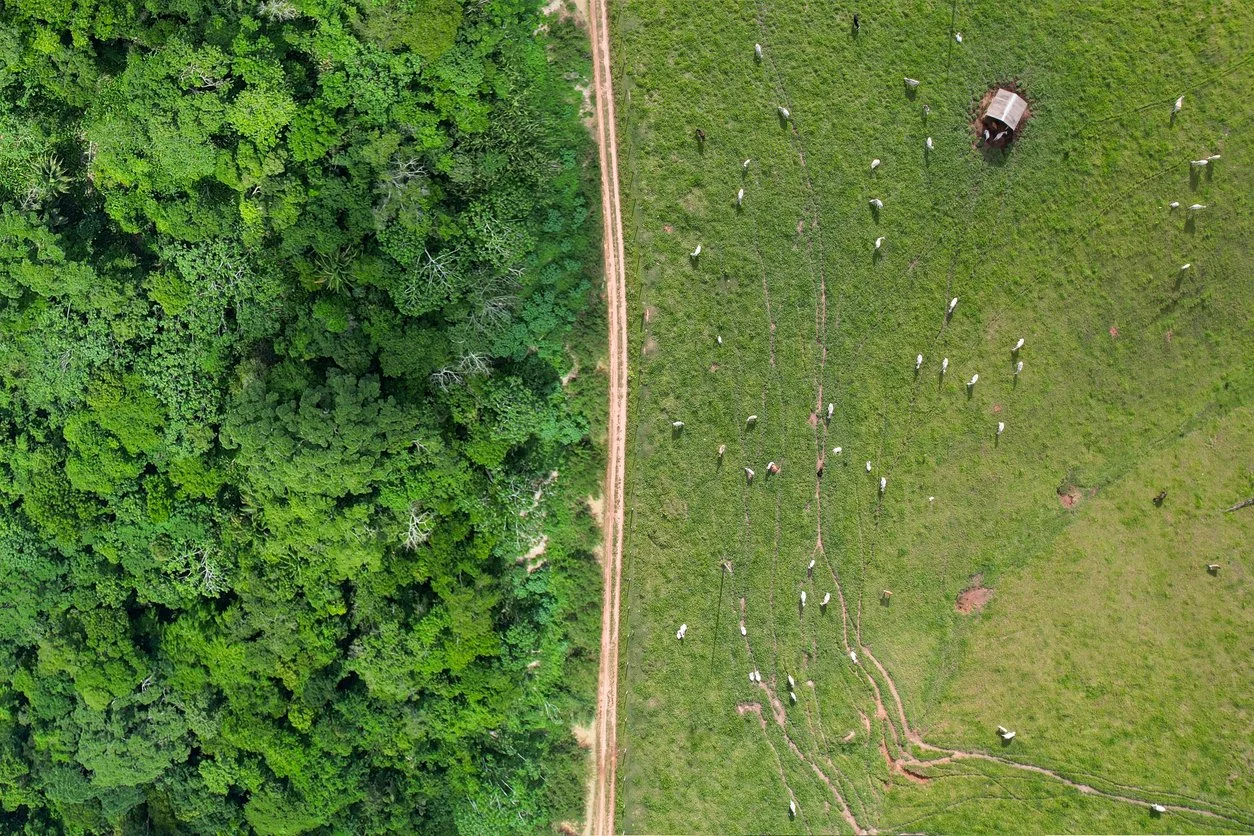
Photo by iStock/Rodrigo Vieira Soares
Leftist incumbent Luiz Inácio Lula da Silva, known as Lula, defeated far-right Flávio Bolsonaro (son of former President Jair Bolsonaro) in Brazil’s presidential election on Sunday. Lula bucked the recent rightward shift across Latin America, where right-wing candidates won seven recent presidential elections. Environmentalists breathed a sigh of relief as Lula promises to keep fighting deforestation.
But the fight for the Amazon is far from over. The primary driver of Amazonian deforestation, agriculture, has become an important part of Brazil’s economy. The rural agribusiness caucus is one of the most powerful forces in Brazilian politics, coalescing multinational corporations, landowning oligarchs, farmers, and rural black-market pioneers, all of whom want to clear more forests. With right-wing majorities entering Brazil’s next National Congress, agribusiness may still weaken environmental regulations in the coming years. Brazilian agribusiness claims to benefit small players, however, most of the gains funnel to the top: a handful of corporations control exports and the top 10% of landowners control over 70% of the land in Brazil’s rural states.
Export-oriented, commodity agriculture is growing relatively faster than other sectors of Brazil’s economy. Since 2000, Brazil’s agricultural output has doubled, and livestock production has tripled. Agricultural products now make up nearly half of all Brazil’s exports. Brazil is the world’s largest producer and exporter of soybeans as of 2020, and earlier this year surpassed the U.S. as the world’s top beef producer. Brazil increasingly exports beef to the U.S., much to American ranchers’ dismay.
Agricultural expansion comes at a cost to the land. Cattle grazing drives 78% of Amazonian deforestation, and cropland drives another 20%. Between 1990 and 2020, Brazil increased its plantings of soybeans by over 70 million acres, an area roughly double the size of Iowa, converting large swaths of the Cerrado and edges of the Amazon into monoculture plantations (or converting grazing land to crops, pushing ranchers to clear more forest for grazing).
Deforestation in the Amazon rainforest and Cerrado savannah disrupts rainfall patterns, prolongs droughts, pollutes waterways, diminishes biodiversity, and accelerates climate change by reducing the planet’s ability to sequester carbon. About 18% of the Amazon has been cleared, and scientists estimate that if it reaches 22-28% cleared, the rainforest’s water cycle could break down, turning the region into degraded forest and savannah and, ironically, reducing rainfall for surrounding ranches and soy farms.
Much deforestation and land seizure from Indigenous peoples and smallholders is technically illegal, but Brazil’s laws around land tenure are ambiguous and corruptible, which landgrabbers, large landholders, and pioneers can exploit. While agri-bolsonaristas claim that expanding the frontier and clearing more land will address rural poverty, the wealth of Brazil’s growing agricultural industry is not widely shared.
“It’s a really unequal distribution of benefits,” says Tyler Antonio Lynch, a doctoral student at Canada’s York University researching land, labor, and the state in Latin America. “It’s like a gold rush. A few poor people will benefit, but they are hugely exploited. Really, this is benefiting the landed classes.”
Brazilian farmers and ranchers are also largely subordinate to concentrated corporate processors. Five firms command more than half of all Brazilian soy exports and just three sell two-thirds of all beef exports, one of which is the world’s largest meatpacking corporation, scandal-ridden JBS. Many of these multinational corporations have commitments to rid deforestation from their supply chains, yet illegal agricultural land clearing continues. For instance, beef producers launder cattle from illegal ranches through intermediaries before reaching large packers such as JBS.
Under the current Lula administration, deforestation rates in the Amazon and Cerrado reached their lowest recorded levels since monitoring began. But this stricter enforcement upset some farmers and rural pioneers. With a downturn in Brazil’s ag economy due to rising input costs, U.S. tariffs, and extreme weather, stressed and resentful farmers are lashing out at environmental regulations and demanding more subsidies.
The rural agribusiness caucus, the Agricultural Parliamentary Front or FPA, is Brazil’s largest multi-party lobbying group – caucus members represent nearly 60% of seats in both chambers of the National Congress and that share could increase. With support from agricultural areas, Bolsonaro’s far-right Liberal Party made major gains this election and will enter 2027 with the largest share of seats of any party in both Brazil’s Chamber of Deputies and Senate, with 23.6% and 34.5%, respectively. Far-right and conservative parties combined will have a supermajority in the Senate and a simple majority in the Chamber of Deputies.
In May, FPA pushed for dramatic legislation to give the Ministry of Agriculture control of Brazil’s endangered species list, take land out of conservation reserves, and prevent environmental agencies from using satellite monitoring to police illegal deforestation, among other deregulatory policies. One report estimates that the latter proposal would hinder 70% of environmental enforcement actions currently conducted in the Amazon.
This legislative package quickly advanced to the Senate, where most bills now remain in various stages of review. With right-wing majorities in Congress, Lynch believes many of these bills will pass and may be able to survive a Presidential veto. For instance, in 2024, Congress overturned Lula’s veto of a pesticide deregulation bill.
Agribusiness will also likely hold its influence over the federal Ministry of Agriculture and Livestock. “Given the sector’s political clout, President Luiz Inácio Lula da Silva has pursued a policy of accommodation since his first term in office,” explains Elisabetta Recine, president of the Brazilian National Food and Nutrition Security Council and panel expert with IPES-Food. “The ministers of agriculture and livestock have consistently been figures drawn from the sector or aligned with its interests.”
Recine notes that the government re-established the ministry dedicated to family farms, land reform, and rural development, which has enabled some progress for women farmers, agrarian reform, and agroecology. However, this ministry has far fewer resources than the primary agriculture ministry, Racine says.
On the other side of this agricultural and environmental debate, Lula will face meaningful pressure to deliver for his base on the left. Movements of landless workers and Indigenous people have been organizing for land reform, demarcation of Indigenous lands, environmental protections, and sustainable agriculture. While not as economically powerful as agribusiness, these groups have been foundational supporters of Lula and the Workers’ Party.
What We’re Reading
DoorDash plans to buy competitor Instacart for $17 billion. (New York Times)
To lower grocery prices, policy experts propose a public option food wholesaler. (The Atlantic)
The Federal Trade Commission and 20 bipartisan state attorneys general sued Dollar General for charging customers more at checkout than the prices displayed on shelves, on price tags, or in advertisements. (FTC)
A recent court order in the FTC’s exclusive dealing lawsuit against Syngenta reveals that several customers avoided purchasing generic agrichemicals for fear of losing lucrative loyalty rebates from Syngenta. (FTC/Court Order)
USDA will provide a total of $573 million to support eight domestic fertilizer companies to expand or develop new facilities. USDA also announced that it will make $5 billion in guaranteed loans available for meat and seafood processors. (USDA)