
New Study Analyzes Farm Bureau’s Deregulatory Litigation Campaign
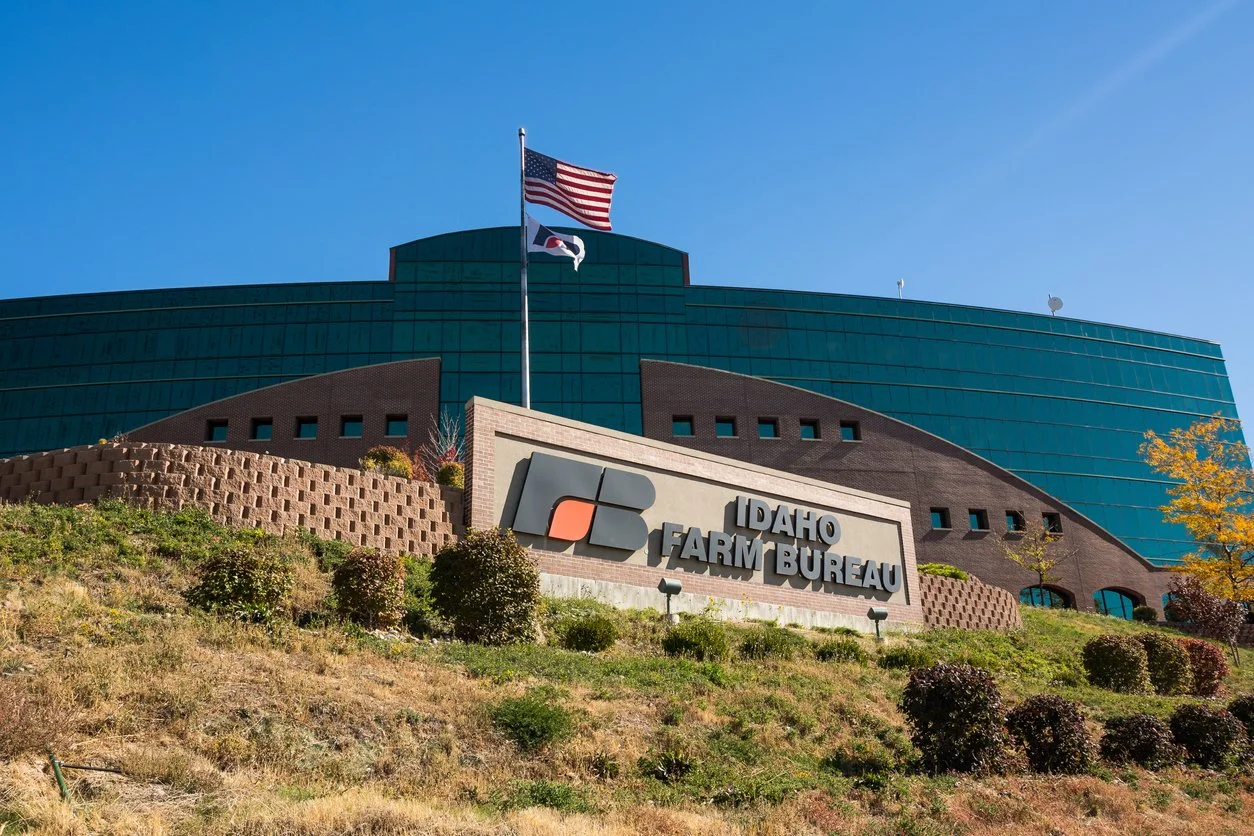
Idaho Farm Bureau headquarters. Photo by iStock/Strekoza2
The American Farm Bureau Federation is one of the most powerful forces in agriculture policy, representing 5 million farmer and rural members with chapters in all 50 states and Puerto Rico. Farm Bureau’s federal lobbying heavily shapes the Farm Bill and state-level legislation, and a new law review article exposes another key arm of its influence machine: litigation.
Farm Bureau invests significant time and resources in court to quash federal and state authority to hold agribusiness accountable for pollution, animal suffering, and abuses of market power, with some success. Private practice environmental attorney and author of the study, Carrie La Seur, concludes that the Farm Bureau’s litigation strategy demonstrates how corporate financial power can work through non-profits to undermine democratic governance and harm the general public.
While Farm Bureau claims to be “the voice of agriculture,” the organization has long advanced the interests of large farms and agribusiness corporations over small farms. From its founding, La Seur argues that the Farm Bureau was not born of a grassroots movement of farmers, but rather “a strategic response by business interests seeking to stabilize rural unrest and channel farmer organizing into more business-friendly channels,” in direct opposition to left-leaning farmer populist movements of the late 19th and early 20th centuries.
Today, the Farm Bureau has expanded into a large, federated network of state chapters and affiliated for-profit enterprises. Most notably, Farm Bureau runs a for-profit insurance business, and, in some states, most Farm Bureau members and dues payers are insurance customers, not farmers. Like any insurance company, Farm Bureau invests the premiums it collects in the stock market, making it literally invested in the success of corporations such as ConAgra, Tyson, and Bayer. Small farm advocates have alleged that these financial ties drive Farm Bureau to oppose antitrust legislation and generally side with corporate interests, even on non-agricultural issues. To be sure, farmer members still play a role in shaping the organization’s policy priorities, but the interests of larger, industrial Farm Bureau members tend to outweigh those of smaller ones.
Farm Bureau’s legal activity seeks to maximize large farm and agribusiness profits by avoiding accountability for air or water pollution, chemical hazards, worker safety, and animal welfare. Between 2020 and 2025, Farm Bureau initiated 11 state and federal lawsuits, resolved 21 of its cases moving through the courts, and intervened in or filed a brief to the judge in 25 cases. Farm Bureau generally brings these suits with other trade organizations, including the National Cattlemen’s Beef Association, the National Mining Association and American Petroleum Institute, the National Pork Producers Council, the National Corn Growers Association, and the U.S. Chamber of Commerce.
These legal actions challenged state regulation of manure discharge from large livestock facilities, farmworker organizing, the Clean Water Act, the National Environmental Protection Act, protections for wolves and grizzly bears, covert recording on livestock farms, and state pesticide label requirements, among other policies. Farm Bureau also submitted petitions and briefs in favor of high profile lawsuits seeking to limit federal agencies’ rulemaking authorities, more broadly.
For example, the Farm Bureau partnered with growers’ associations and a chemical company to demand judicial review of the Environmental Protection Agency’s (EPA) decision to effectively ban the use of chlorpyrifos in food production, a pesticide linked to nervous system, cardiovascular, and respiratory issues that is banned in the European Union. At the Farm Bureau’s urging, the Eighth Circuit U.S. Court of Appeals required EPA to modify its chlorpyrifos rules and allow trace amounts of the chemical on food.
Other targets are much smaller; for instance, the Farm Bureau sued the 1,024-person town of Laketown, Wisconsin, after it passed a local ordinance to regulate large livestock farms. New members on the town board later voted to overturn the ordinance. To prevent other towns from following suit, the Farm Bureau pushed Wisconsin legislators to pass a statewide law restricting local control over animal farms, which did pass both houses, but got vetoed by the Governor.
Farm Bureau’s lawsuits have mixed success. The organization generally failed when it tried to challenge free-speech rights or citizen-passed ballot initiatives. But the Farm Bureau has succeeded in substantially delaying or overturning state permitting rules and ordinances around agricultural pollution and large livestock operations. They’ve also been an ally in larger legal battles to limit the bodies of water covered by the Clean Water Act and diminish federal agencies’ deference in interpreting laws, which represent major setbacks to the strength of the administrative state and its ability to challenge corporate power.
La Seur argues that Farm Bureau doesn’t need to win every case to undermine public policy. “Whether or not they win in court, delay serves their larger strategic interest,” she writes. “In this sense, Farm Bureau’s litigation strategy is less about winning and more about managing the policy environment: keeping it reactive, fractured, and favorable to large-scale agricultural interests.” Bigger picture, the Farm Bureau case study demonstrates how corporations can leverage ostensibly grassroots organizations to shape regulations in their favor and undermine federal administrative authority itself.
What We’re Reading
One month after President Trump announced plans to import more ground beef, analyses find that prices paid to U.S. cattle ranchers have shrunk over 10% while consumer prices have barely dropped. (Civil Eats/Farm Action)
A new “Agribusiness Atlas” documents corporate concentration in fisheries, plant genetics, and AgTech software, and explores the harms of corporate influence over grocery prices, clean water access, food policymaking, and more. (iPES-Food)
The Federal Trade Commission and U.S. Department of Agriculture seek public comments on business practices that increase prices, reduce innovation, or otherwise harm farmers in the agricultural equipment industry. (FTC)
Independent Senate candidate Dan Osborn, running on an economic populist platform that calls out food and agriculture monopolies, stands a chance to win in deep red Nebraska. Public anger over corporate-friendly agricultural markets, Big Ag pollution, and rural healthcare consolidation is driving voters away from establishment politicians across the Heartland. (The New Republic and FERN)