
DOJ and State AGs Settle Agri Stats Suit
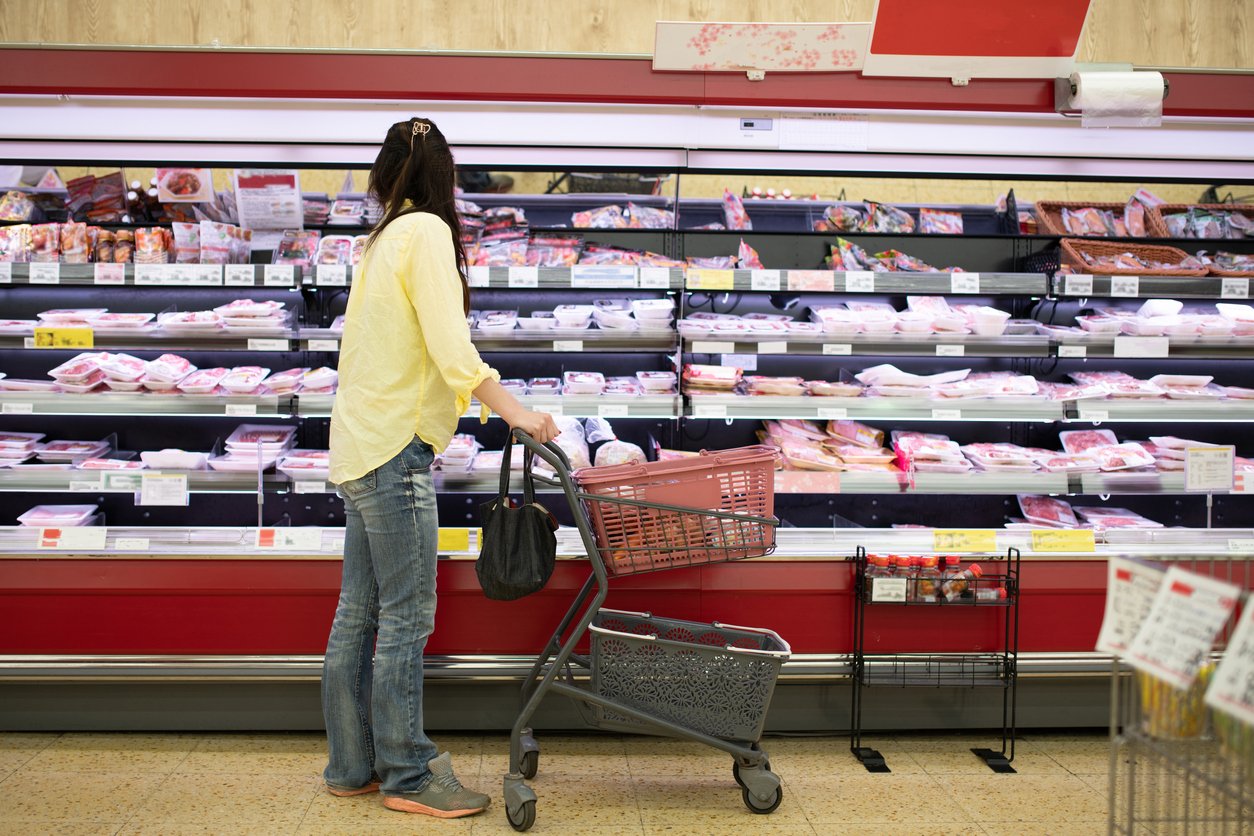
Photo by iStock/Hakase_
The data-sharing corporation, Agri Stats, is at the center of a massive alleged price-fixing conspiracy in the meat industry. In 2023, the Department of Justice sued Agri Stats for sharing sensitive information between meatpacking competitors and helping them restrict the meat supply. Last week, President Trump’s DOJ and all six state attorneys general involved in the lawsuit settled with Agri Stats just before trial.
The settlement would restrict what information Agri Stats can share and how it can present it, focusing on data that packers could use to coordinate prices or monitor each other’s future production. It assigns Agri Stats an antitrust monitor to watchdog the corporation’s next moves. The settlement did not require Agri Stats to admit it violated antitrust law, and the corporation continues to deny all allegations.
The Department of Justice and, notably, the bipartisan group of state attorneys general that joined the settlement argue that it will put an end to the conspiracy and deliver relief for consumers. Some antitrust advocates argue that going to trial could have won a stronger judgment to prevent Agri Stats and other third parties from facilitating collusion via data-sharing. The settlement is a complicated behavioral remedy, which are historically hard to enforce.
Agri Stats collected detailed information on virtually every aspect of meatpacking operations, from what packers paid their workers and farmers to the minute operations of their plant machinery, plus plenty of data on pricing. Agri Stats installed software directly into their members’ computer systems to download internal reports, which Agri Stats then audited, compiled, and thinly anonymized for all members to see. This provided a level of detail and timeliness far beyond what meatpacking corporations could glean through other market research datasets.
Agri Stats used this information to offer consulting services to meatpacking corporations, encouraging them to raise prices to be more in line with competitors, a practice some packers called “pricing with courage,” according to the DOJ’s lawsuit. One Smithfield executive described Agri Stat’s advice as: “Just raise your price.”
Agri Stats also allegedly helped packers hold back supply in tandem, raising prices even more. For instance, the former CEO of Sanderson Farms assured investors that it didn’t need to increase chicken production, saying, “I see a lot of information from Agri Stats that tells me that nobody’s going to ramp up.”
During the alleged conspiracy, turkey processing margins increased 300% in just three years, Tyson Foods’s operating margin grew from 1.6% in 2009 to nearly 12% by 2016, and wholesale pork prices rose over 50% in five years after nearly a decade of relative price stability. After Agri Stats suspended its turkey and pork reporting programs in 2019 (following a barrage of private antitrust litigation), the government’s economic expert found that turkey and pork prices dropped as a result.
The settlement prevents Agri Stats from sharing any non-public information on the amounts charged or paid for meat products, i.e., pricing and sales data. Any data that reflects production decisions, like breeder chicken placements, must be at least 90 days old. Agri Stats must take steps to aggregate and obscure information to ensure packer anonymity. These restrictions, and others, seek to remove information that packers could use to coordinate production or pricing.
An Agri Stats subsidiary, EMI, will still be able to publish chicken pricing information. To prevent Agri Stats from exploiting this potential loophole, it must seek approval from a court-appointed monitor to make changes to EMI reports.
The settlement also requires Agri Stats to make all its reports available to anyone who wants to buy them. Until now, only meatpacking corporations could see Agri Stats reports, so packers knew if they were offering below average prices, but buyers did not know if they were paying above average. Expanding access to Agri Stats reports could allow meat buyers to keep packers in check, though it’s possible only the largest retailers will be able to afford the data. Agri Stats cannot charge non-packer buyers more than packers, per the settlement.
It’s not clear if the meatpacking industry and other buyers will pay for costly Agri Stats reports without the old pricing and production data. Lee Hepner, senior legal counsel at the American Economic Liberties Project, thinks packers will participate and worries that they can still use more general and historic data to predict future trends and coordinate. “This notion that anonymized or aggregated data from individual contributors is going to inhibit the operation of a cartel is short-sighted in an oligopoly market where competitors can make inferences as to how other processors in the market are behaving,” Hepner says.
A source from the Minnesota Attorney General’s Office, which led the states in the suit, explained that Agri Stats will be prohibited from sharing the ‘vast majority’ of information previously shared that raised competitive concerns, and that the DOJ and states designed the settlement to address all meaningful competitive concerns.
Agri Stat’s consulting services were a significant part of alleged price-fixing conspiracies. The settlement allows Agri Stats to continue consulting packers, but it can no longer provide them “price opportunities.” Agri Stats will need to put together a settlement compliance plan for the DOJ and state AGs to review. But it will take a lot of oversight to ensure that all Agri Stats consultants follow the rules in their discussions with packers.
Suffice to say, the settlement is extremely complicated, and its success hinges heavily on the effectiveness of the court-appointed monitor and their team. Such complicated behavioral settlements are notoriously challenging to enforce. “The whole history of conduct-oriented decrees is not good,” says emeritus law professor and former DOJ antitrust attorney, Peter Carstensen. “The problem with any of these decrees is enforcement over time.”
Meatpackers have run afoul of other recent court orders to stop information sharing. In 2023, poultry processor Wayne-Sanderson agreed to stop sharing or receiving any competitively sensitive wage data from Agri Stats after the DOJ accused Wayne-Sanderson of conspiring with competitors to suppress wages. A year later, the court-appointed monitor reported that Wayne-Sanderson was still sharing worker compensation data with Agri Stats, prompting the DOJ to step in.
Hepner wishes the suit had gone to trial to set broader precedent and stronger, bright-line prohibitions. Carstensen and Hepner both said that a judgement at trial could have barred Agri Stats from operating in the meatpacking sector or collecting non-public information altogether. “You would expect enforcement against a cartel to eliminate the participation of the service that was facilitating the cartel,” Hepner says. “An order following judgment might have prohibited Agri Stats and its officers from interfacing with these processors; that kind of debarment remedy is not foreign nor is it out of the reach of the antitrust laws.”
Antitrust experts are also concerned that more corporations will rely on a third party to share sensitive, anti-competitive information and coordinate collusive activity. In the food industry alone, sugar corporations, egg processors, and frozen fry makers have all been accused of price-fixing with the help of a data-service. Some scholars have argued that most competitively sensitive information exchanges should be presumptively illegal as a restraint of trade.
Advocates hoped the Agri Stats case would set this type of precedent. “We don’t have useful, definitive, strict standards for looking at these kinds of information exchanges, and the loss of Agri Stats is the loss of one more opportunity to get that,” says Carstensen.
The Trump administration has a track record of settling antitrust suits before trial. However, the state attorneys general could have rejected the settlement and continued to trial on their own, as they did recently in the antitrust suit against Ticketmaster and Live Nation. But in this case, the states decided a trial was not worth the risk and cost. A source from the Minnesota Attorney General’s office felt that this settlement reflected excellent injunctive relief, given that trial is inherently uncertain in terms of liability and relief.
What We’re Reading
iPES-Food published a report outlining how countries can improve their food security in a world where highly consolidated global supply chains make many countries vulnerable to supply chain disruptions and price volatility. (iPES-Food)
The rules are stacked against them, but rural grocers in Minnesota continue to fight to keep their communities fed. (Who Shall Rule)
Relatedly, Claire Kelloway and Ron Knox spoke about rural grocers and the Robinson-Patman Act on KFGO’s News and Views program. (KFGO)
More Perfect Union explains how food corporations fund nutrition research to influence federal dietary guidelines. (More Perfect Union)